
What Executive Leaders Are Saying

Executive teams come to us when trust is shaky, proactivity is dead, and the CEO is doing all the thinking. Here’s what they say after we fix it.

5.0 ★★★★★ rating on Google (70+ reviews from executives and senior leaders)

Trusted by executive teams at Fortune 500s, federal agencies, and high-growth mid‑market companies.

Trusted by Leaders At…

Executive Teams That Needed More Than Another “Feel‑Good” Offsite

Executive Coaching for Leaders Who Are the Bottleneck

Retreats, Keynotes, Workshops and Google Reviews That Actually Change Behavior

Case Studies

From “Great Culture, Just Busy” to a System‑Level View of Leadership Gaps

Sector

Transportation / Heavy Equipment

Organization size

1,000+ employees, 40+ locations

Scope

GMs, Parts & Service leaders, emerging leaders

The Situation

A fast‑growing, multi‑location truck and equipment dealer was experiencing the strain of:

  • Rapid expansion across regions and acquisitions
  • Increasing complexity in parts and service operations
  • Leaders pulled between “fighting fires” and trying to develop their people

On paper, the culture was strong. In every early conversation, leaders said some version of:
We have a great team. We don’t have a culture problem. We’re just busy.

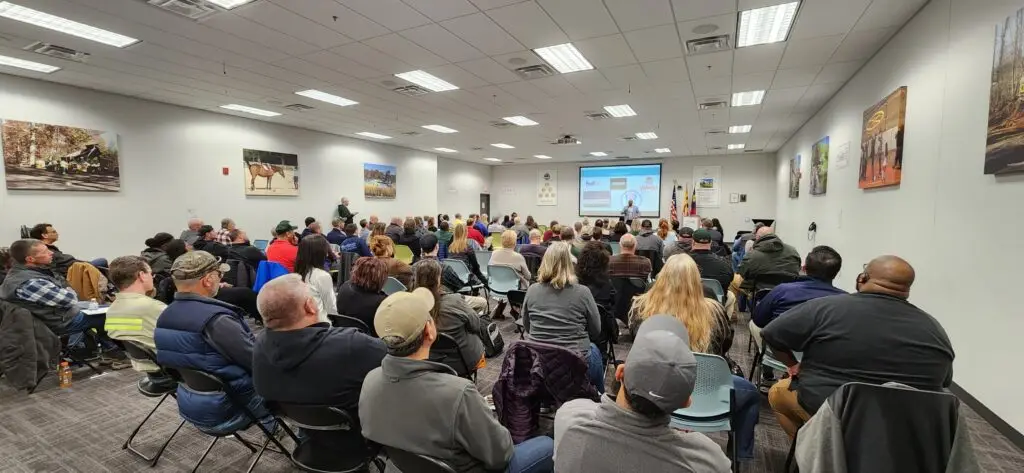
They brought in GPS Leadership Solutions initially to deliver a high‑impact keynote and GM workshop for their annual leadership event, focused on:

  • Leading through the daily whirlwind of demands
  • Delegating instead of doing all the work personally
  • Protecting time for “important but not urgent” leadership work

Session feedback was world‑class. Senior leaders wanted to know:
“Is there something bigger here than just ‘good workshops’? Are there deeper patterns we should actually fix?”

They engaged GPS to run a targeted diagnostic and, if warranted, recommend a leadership operating system.

Phase 1 – Diagnostic: Moving Beyond Anecdotes

We started with a focused diagnostic built around our TP3™ (Trust, Proactivity, Productivity) and leadership behavior model:

  • Themes from the first wave of data:
    • Trust was relatively strong.
    • Proactivity and productivity lagged, especially in parts and service.
    • Leaders reported:
      • Doing too much of the work themselves
      • Difficulty prioritizing beyond the urgent
      • Uneven delegation and accountability
      • Inconsistent leadership behaviors between stores
  • Six‑week follow‑up pulse:
    • We sent a short follow‑up survey six weeks after the event to see:
      • What leaders actually tried,
      • How much they’d applied, and
      • What was getting in the way.
  • Results showed:
    • Every respondent had tried at least one core behavior (delegation, scheduling important‑but‑not‑urgent time, trust‑building conversations, clearer expectations).
    • Self‑rated application averaged ~7–8 out of 10.
    • The #1 blocker: “Lack of time / constant urgent issues.”
    • The #2 blocker: existing systems and unclear priorities that conflicted with the new way of working.

Phase 2 – Live Leadership Activation: Giving Leaders Tools, Not Just Ideas

With the initial diagnostic insights in hand, we designed and delivered:

  • A virtual GM workshop focused on:
    • Getting out of the weeds and into true GM‑level work
    • Delegating in a way that actually sticks
    • Handling difficult conversations and accountability without burning out
  • An in-person leadership session for a broader group of leaders focused on:
    • Trust, Proactivity, and Productivity as practical levers
    • Clarifying priorities and expectations
    • Turning “someday leadership” into specific weekly behaviors

Leaders rated the sessions at the top of the scale and stayed past time to ask questions and request tools. Many reached out 1:1 afterwards for:

  • Templates for running more effective huddles
  • Scripts for delegation and tough conversations
  • Help thinking through how to engage their teams during slow periods

The workshops:

  • Built shared language around TP3 and the daily whirlwind
  • Gave leaders practical tools to start shifting their behavior
  • Generated the leadership buy‑in needed for a deeper system‑level conversation

Baseline survey:

  • 170+ leaders and managers completed a TP3‑based survey after the event.
  • Ratings for the sessions were exceptional:
    • Net Promoter Scores: 9.2–9.8 / 10
    • Value: 4.7–5.0 / 5
    • “Disappointed if removed”: 88–100%

Phase 3 – System‑Level Insight & Leadership Operating System Blueprint

Using the session data, surveys, and follow‑up conversations, we synthesized:

  • What leaders actually wanted help with:
    • Delegation and empowerment
    • Time use and prioritization
    • Running effective meetings and huddles
    • Developing people and bench strength
    • Breaking “us vs them” patterns between stores and corporate
  • Where the system was working against them:
    • Everything felt urgent; little protected time for leadership work
    • Existing processes and tools sometimes conflicted with the desired behaviors
    • No single “Way of Leading” across 40+ locations – each store leader was improvising

We then proposed a Leadership Operating System blueprint built on three phases:

  • Assess – Company‑Wide Diagnostic & Blueprint (Phase 1 of a 12‑month system)
    • Organization‑wide leadership assessment (expanding beyond the initial cohort).
    • 10–20 stakeholder interviews with executives, RVPs, high‑performing and watchlist stores.
    • Leadership competency and TP3 analysis by role, region, tenure, and performance tier.
    • A clear, documented “Way of Leading” for GMs, parts, and service managers.
  • Deliver – Pilot Implementation in 5–7 Stores
    • Install standard leadership cadences and tools in a cross‑section of stores.
    • Bi‑weekly coaching for pilot leaders and monthly reviews with senior leadership.
    • Refine tools based on real‑world use.
  • Sustain & Strengthen – Scale & Internalize
    • Train‑the‑trainer for HR and RVPs.
    • Final BLOS playbook and field guides.
    • Integration into hiring, promotion, and recognition systems.

At the time of writing, the client is comparing options for enterprise‑level leadership development. The diagnostic and leadership activation work with GPS has given them:

  • A much clearer, data‑backed picture of what’s really constraining their leaders (time, systems, and structure – not willpower).
  • High‑credibility proof that their leaders are willing to change behaviors when given the tools.
  • A structured, phased blueprint for how to turn “great culture and great workshops” into a repeatable Way of Leading across all locations.

Key Outcomes & Insight for the Client

  • The diagnostic showed that leadership friction and execution gaps existed even inside a proud, high‑trust culture – and that leaders were compensating, not complaining.
  • Tailored workshops built shared language and tools around delegation, time use, and leading through the whirlwind.
  • Follow‑up data confirmed that leaders applied the ideas, but the system of constant urgency and unstructured leadership expectations remained the core constraint.
  • GPS was able to present a clear, multi‑phase Leadership Operating System blueprint that directly answered the issues leaders had surfaced, rather than layering on “one more program.”

This engagement demonstrated the GPS model:

Diagnose the real constraints, activate leaders with practical tools, then design the system that makes those new behaviors sustainable at scale.


From “We Don’t Have a Trust Problem” to Data‑Backed Alignment in Marketing

Sector

Banking / Financial Services

Organization size

20,000+ employees

Scope

Marketing division leadership (50+ leaders)

The Situation

The Marketing division of a large, member‑focused financial institution was feeling the drag of:

  • Growing work volume and complexity
  • Slowed collaboration across teams
  • Leaders stretched between “everything is a priority”

In early conversations, the internal project team was clear on one point:

“We don’t have a trust problem. Our people get along fine.”

Senior leadership wanted to “do something” for their managers, but they weren’t convinced there was a deeper leadership issue to solve.

They engaged GPS Leadership Solutions to run a data‑driven assessment and, if warranted, a targeted leadership activation.

Phase 1 – Diagnostic: Surfacing the Real Issues

We started with a focused leadership diagnostic:

  • Anonymous survey across Marketing leaders and key stakeholders
  • Questions tied to Trust, Proactivity, and Productivity (TP3™)
  • Open‑text responses on collaboration, clarity, and workload

The results contradicted the initial narrative:

  • Clear signals of low trust in parts of the leadership group
  • Friction in cross‑team collaboration and handoffs
  • Widespread strain around bandwidth, prioritization, and “too many number‑one priorities”

Leaders weren’t “fine.” They were compensating.

This data shifted the conversation from “nice to have training” to “we have specific behavior and relationship patterns to fix.”

Phase 2 – In‑Person Leadership Activation

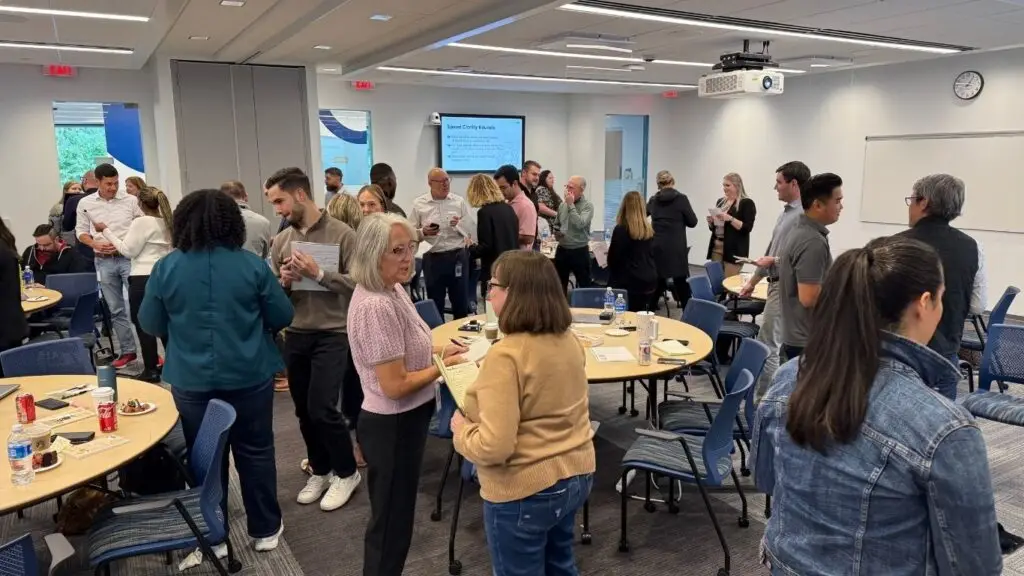
With the diagnostic in hand, we designed a custom in‑person session for ~50 Marketing leaders focused on:

  • Naming and normalizing the trust and collaboration challenges revealed in the survey
  • Giving leaders concrete tools to have difficult, trust‑building conversations with peers and teams
  • Turning vague concerns about workload into specific 90‑day leadership commitments

Post‑session scores were top tier:

  • Net Promoter Score: 9.1 / 10
  • Content value: 4.6 / 5
  • Facilitator effectiveness: 4.85 / 5

Leaders left with:

  • A shared understanding of where trust and collaboration were truly breaking
  • Specific behaviors to change in how they communicate, delegate, and hold each other accountable
  • A 90‑Day Leadership Impact Plan tied to their own teams.

Phase 3 – Virtual Follow‑Up & Reality Check

Ninety days later, we ran a virtual follow‑up session plus a second round of surveys to answer two questions:

  1. How much of the work was actually being applied?
  2. What was getting in the way?

The data showed:

  • Leaders continued to rate the sessions highly and saw them as relevant to real work.
  • Many reported behavior changes: tighter prioritization, more intentional 1:1s, better delegation, more cross‑team communication.
  • Across responses, the dominant blocker to further application was “lack of time / competing priorities.”

When asked if leadership‑blocked time on their calendars would solve that, the answers were mixed. Underneath that was a consistent message:

Without clearer, narrower priorities and visible trade‑offs from senior leadership, blocked time alone won’t stick. It just means doing “real work” at night.

Key Outcomes & Insight for the Client

    • The diagnostic proved a trust and collaboration issue leadership didn’t initially believe existed.
    • Tailored sessions then gave managers shared language, tools, and 90‑day plans to address those issues directly.
    • Follow‑up data confirmed that leaders were willing and able to change behaviors, but the system of “everything is urgent” remained the core constraint.

    Our recommendation to the executive team:

    • Pair any future leadership development with priority discipline and clear trade‑offs.
    • Equip managers with scripts and structures to safely push back, negotiate priorities, and focus on the few initiatives that matter most.
    • Only then will any blocked “development time” and leadership programs convert to sustained, visible change.

    This engagement demonstrated the GPS model: Diagnose the real constraints, tailor the intervention to those constraints, then use data to show where the system still needs to change.