What Happens When CEOs Stop Carrying Everything Themselves
When CEOs of established companies install the Executive Impact System, everything shifts. Decisions get made faster, leaders step up instead of every issue rolling back to the CEO, and execution becomes consistent across teams. This page shows what that looks like in real companies.
What changes. When work stops routing through one person, decisions get made faster, leaders own outcomes instead of escalating them, and execution becomes consistent across the company.
- Grouped by the problem that started it, not by client logo
- Each one follows the same shape: the bottleneck, what the diagnostic showed, what changed in 90 days
- Client names appear only where the client has given explicit written permission
Reading the evidence
How we score, and what kind of evidence each case has
Every rating on this page uses the same 1 to 5 scale. How to interpret these ratings
Raters judge the person in the seat, not the seat itself. The score is not a grade; it is a decision.
Four kinds of evidence
- Experience and satisfactionWhat participants thought of a session or debrief. All five cases on this page have it.
- Reported applicationWhat participants said they tried or changed afterward. All five cases have it, from follow-up surveys or check-ins.
- Observed behaviorChange rated by the people who work with the leader, at 30, 60 and 90 days. The three recent cases have it.
- Organizational outcomesBusiness measures such as revenue or decision speed. Not yet measured in these cases.
Measured, not asserted
What changes, rated by the people around each leader
Every leader picks one behavior to change. The people who work with them rate it on a 1 to 5 scale at the start, then at 30, 60 and 90 days. A 4 is the bar. How to interpret these ratings
- 3.92Average rating at the start
- 4.20Average at 30 days
- 4.29Average at 60 days
- 4.67Average at 90 days
From the two longer case studies below
- 9.1 / 10Net Promoter Score after an in-person session with 47 marketing leaders (case study 2)Participant satisfaction
- 4.6 / 5Content value, same sessionParticipant satisfaction
- 4.85 / 5Facilitator effectiveness, same sessionParticipant satisfaction
- ~7 to 8 / 10Average self-rated application six weeks after a leadership event (case study 1)Self-reported application
From “Great Culture, Just Busy” to a System‑Level View of Leadership Gaps
Sector
Transportation / Heavy Equipment
Organization size
1,000+ employees, 40+ locations
Scope
GMs, Parts & Service leaders, emerging leaders
The Situation
A fast‑growing, multi‑location truck and equipment dealer was experiencing the strain of:
- Rapid expansion across regions and acquisitions
- Increasing complexity in parts and service operations
- Leaders pulled between “fighting fires” and trying to develop their people
On paper, the culture was strong. In every early conversation, leaders said some version of:
“We have a great team. We don’t have a culture problem. We’re just busy.”
They brought in GPS Leadership Solutions initially to deliver a high‑impact keynote and GM workshop for their annual leadership event, focused on:
- Leading through the daily whirlwind of demands
- Delegating instead of doing all the work personally
- Protecting time for “important but not urgent” leadership work
Session feedback was world‑class. Senior leaders wanted to know:
“Is there something bigger here than just ‘good workshops’? Are there deeper patterns we should actually fix?”
They engaged GPS to run a targeted diagnostic and, if warranted, recommend the Executive Impact System.
Read More
Phase 1 · Diagnostic: Moving Beyond Anecdotes
We started with a focused diagnostic built around our TP3™ (Trust, Proactivity, Productivity) and leadership behavior model:
- Themes from the first wave of data:
- Trust was relatively strong.
- Proactivity and productivity lagged, especially in parts and service.
- Leaders reported:
- Doing too much of the work themselves
- Difficulty prioritizing beyond the urgent
- Uneven delegation and accountability
- Inconsistent leadership behaviors between stores
- Six‑week follow‑up pulse:
- We sent a short follow‑up survey six weeks after the event to see:
- What leaders actually tried,
- How much they’d applied, and
- What was getting in the way.
- We sent a short follow‑up survey six weeks after the event to see:
- Results showed:
- Every respondent had tried at least one core behavior (delegation, scheduling important‑but‑not‑urgent time, trust‑building conversations, clearer expectations).
- Self‑rated application averaged ~7 to 8 out of 10.
- The #1 blocker: “Lack of time / constant urgent issues.”
- The #2 blocker: existing systems and unclear priorities that conflicted with the new way of working.
Phase 2 · Live Leadership Activation: Giving Leaders Tools, Not Just Ideas
With the initial diagnostic insights in hand, we designed and delivered:
- A virtual GM workshop focused on:
- Getting out of the weeds and into true GM‑level work
- Delegating in a way that actually sticks
- Handling difficult conversations and accountability without burning out
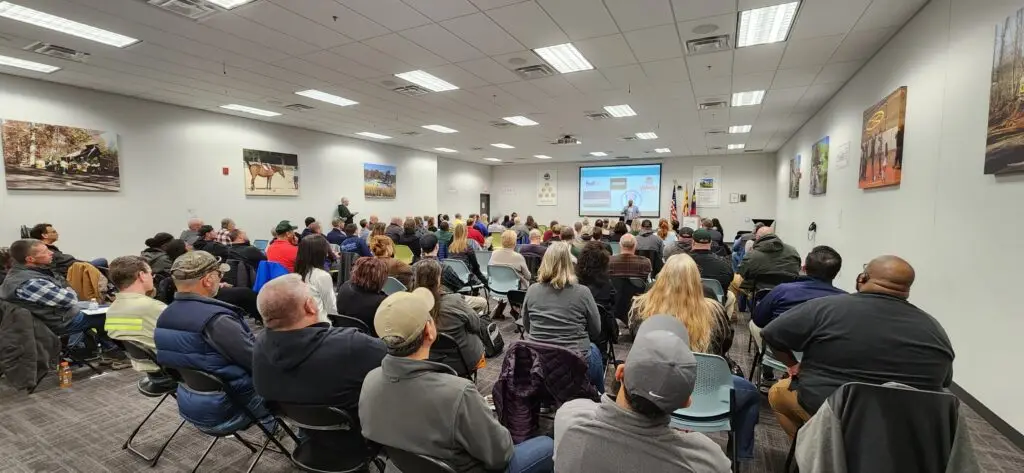
- An in-person leadership session for a broader group of leaders focused on:
- Trust, Proactivity, and Productivity as practical levers
- Clarifying priorities and expectations
- Turning “someday leadership” into specific weekly behaviors
Leaders rated the sessions at the top of the scale and stayed past time to ask questions and request tools. Many reached out 1:1 afterwards for:
- Templates for running more effective huddles
- Scripts for delegation and tough conversations
- Help thinking through how to engage their teams during slow periods
The workshops:
- Built shared language around TP3 and the daily whirlwind
- Gave leaders practical tools to start shifting their behavior
- Generated the leadership buy‑in needed for a deeper system‑level conversation
Baseline survey:
- 170+ leaders and managers completed a TP3‑based survey after the event.
- Ratings for the sessions were exceptional:
- Net Promoter Scores: 9.2 to 9.8 / 10
- Value: 4.7 to 5.0 / 5
- “Disappointed if removed”: 88 to 100%
Phase 3 · System‑Level Insight & Executive Impact System Blueprint
Using the session data, surveys, and follow‑up conversations, we synthesized:
- What leaders actually wanted help with:
- Handing off decisions
- Time use and prioritization
- Running effective meetings and huddles
- Developing people and bench strength
- Breaking “us vs them” patterns between stores and corporate
- Where the system was working against them:
- Everything felt urgent; little protected time for leadership work
- Existing processes and tools sometimes conflicted with the desired behaviors
- No single “Way of Leading” across 40+ locations. Each store leader was improvising
We then proposed an Executive Impact System blueprint built on three phases:
- Assess · Company‑Wide Diagnostic & Blueprint (Phase 1 of a 12‑month system)
- Organization‑wide leadership assessment (expanding beyond the initial cohort).
- 10 to 20 stakeholder interviews with executives, RVPs, high‑performing and watchlist stores.
- Leadership competency and TP3 analysis by role, region, tenure, and performance tier.
- A clear, documented “Way of Leading” for GMs, parts, and service managers.
- Deliver · Pilot Implementation in 5 to 7 Stores
- Install standard leadership cadences and tools in a cross‑section of stores.
- Bi‑weekly coaching for pilot leaders and monthly reviews with senior leadership.
- Refine tools based on real‑world use.
- Sustain & Strengthen · Scale & Internalize
- Train‑the‑trainer for HR and RVPs.
- Final BLOS playbook and field guides.
- Integration into hiring, promotion, and recognition systems.
At the time of writing, the client is comparing options for enterprise‑level leadership development. The diagnostic and leadership activation work with GPS has given them:
- A much clearer, data‑backed picture of what’s really constraining their leaders (time, systems, and structure, not willpower).
- High‑credibility proof that their leaders are willing to change behaviors when given the tools.
- A structured, phased blueprint for how to turn “great culture and great workshops” into a repeatable Way of Leading across all locations.
Key Outcomes & Insight for the Client
- The diagnostic showed that leadership friction and execution gaps existed even inside a proud, high‑trust culture, and that leaders were compensating, not complaining.
- Tailored workshops built shared language and tools around delegation, time use, and leading through the whirlwind.
- Follow‑up data confirmed that leaders applied the ideas, but the system of constant urgency and unstructured leadership expectations remained the core constraint.
- GPS was able to present a clear, multi‑phase Executive Impact System blueprint that directly answered the issues leaders had surfaced, rather than layering on “one more program.”
This engagement demonstrated the GPS model:
Diagnose the real constraints, activate leaders with practical tools, then design the system that makes those new behaviors sustainable at scale.
From “We Don’t Have a Trust Problem” to Data‑Backed Alignment in Marketing
Sector
Banking / Financial Services
Organization size
20,000+ employees
Scope
Marketing division leadership (50+ leaders)
The Situation
The Marketing division of a large, member‑focused financial institution was feeling the drag of:
- Growing work volume and complexity
- Slowed collaboration across teams
- Leaders stretched between “everything is a priority”
In early conversations, the internal project team was clear on one point:
“We don’t have a trust problem. Our people get along fine.”
Senior leadership wanted to “do something” for their managers, but they weren’t convinced there was a deeper leadership issue to solve.
They engaged GPS Leadership Solutions to run a data‑driven assessment and, if warranted, a targeted leadership activation.
Read MoreLess
Phase 1 · Diagnostic: Surfacing the Real Issues
We started with a focused leadership diagnostic:
- Anonymous survey across Marketing leaders and key stakeholders
- Questions tied to Trust, Proactivity, and Productivity (TP3™)
- Open‑text responses on collaboration, clarity, and workload
The results contradicted the initial narrative:
- Clear signals of low trust in parts of the leadership group
- Friction in cross‑team collaboration and handoffs
- Widespread strain around bandwidth, prioritization, and “too many number‑one priorities”
Leaders weren’t “fine.” They were compensating.
This data shifted the conversation from “nice to have training” to “we have specific behavior and relationship patterns to fix.”
Phase 2 · In‑Person Leadership Activation
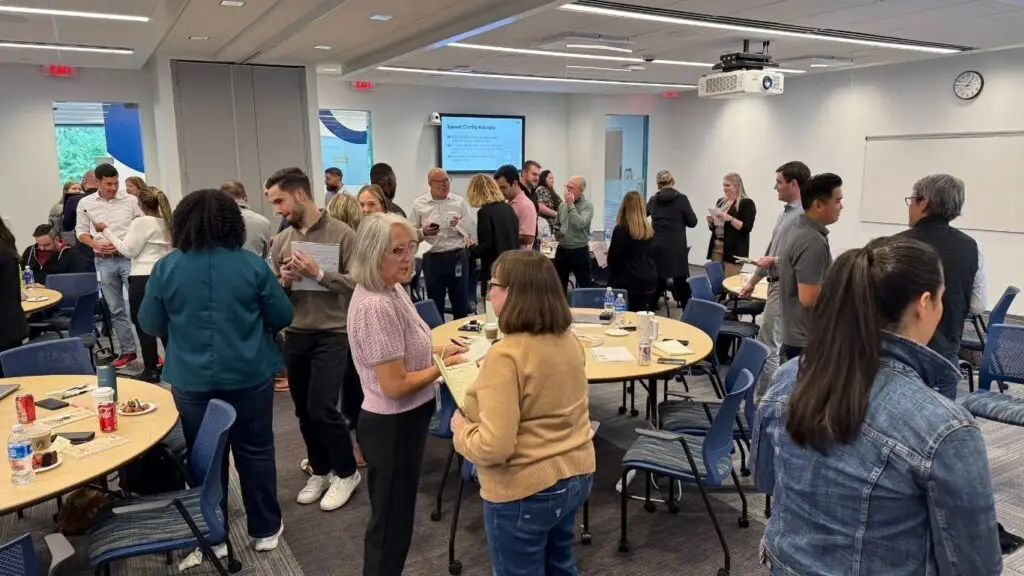
With the diagnostic in hand, we designed a custom in‑person session for 47 Marketing leaders focused on:
- Naming and normalizing the trust and collaboration challenges revealed in the survey
- Giving leaders concrete tools to have difficult, trust‑building conversations with peers and teams
- Turning vague concerns about workload into specific 90‑day leadership commitments
Post‑session scores were top tier:
- Net Promoter Score: 9.1 / 10
- Content value: 4.6 / 5
- Facilitator effectiveness: 4.85 / 5
Leaders left with:
- A shared understanding of where trust and collaboration were truly breaking
- Specific behaviors to change in how they communicate, delegate, and hold each other accountable
- A 90‑Day Leadership Impact Plan tied to their own teams.
Phase 3 · Virtual Follow‑Up & Reality Check
Ninety days later, we ran a virtual follow‑up session plus a second round of surveys to answer two questions:
- How much of the work was actually being applied?
- What was getting in the way?
The data showed:
- Leaders continued to rate the sessions highly and saw them as relevant to real work.
- Many reported behavior changes: tighter prioritization, more intentional 1:1s, better delegation, more cross‑team communication.
- Across responses, the dominant blocker to further application was “lack of time / competing priorities.”
When asked if leadership‑blocked time on their calendars would solve that, the answers were mixed. Underneath that was a consistent message:
Without clearer, narrower priorities and visible trade‑offs from senior leadership, blocked time alone won’t stick. It just means doing “real work” at night.
Key Outcomes & Insight for the Client
- The diagnostic proved a trust and collaboration issue leadership didn’t initially believe existed.
- Tailored sessions then gave managers shared language, tools, and 90‑day plans to address those issues directly.
- Follow‑up data confirmed that leaders were willing and able to change behaviors, but the system of “everything is urgent” remained the core constraint.
Our recommendation to the executive team:
- Pair any future leadership development with priority discipline and clear trade‑offs.
- Equip managers with scripts and structures to safely push back, negotiate priorities, and focus on the few initiatives that matter most.
- Only then will any blocked “development time” and leadership programs convert to sustained, visible change.
This engagement demonstrated the GPS model: Diagnose the real constraints, tailor the intervention to those constraints, then use data to show where the system still needs to change.
Recent engagements
Three recent cases, with the numbers
Clients are not named. Ratings are from the people who work with each leader, on a 1 to 5 scale.
Restarting growth after four flat years
Privately owned truck parts business, a little over $12 million in annual revenue · Owner and general manager
- The challenge
- The owner asked for help after hearing Alex speak at a conference. Revenue had been flat for four years, and the owner wanted the business to grow and to last.
- What the diagnostic found
- Seventeen stakeholders rated the general manager. Direct reports gave 4.5 out of 5. The owner gave 2.8, with trust at 2.4, deep in red-flag territory. Part of it was visibility: the owner could not see what was being decided or why. The deeper part surprised them both. For twenty years the general manager had been promoted and rewarded for jumping in and solving everyone's problems, and nobody had said that growth now needed something different.
- What we changed
- One email every Sunday night: what was decided and why, and what is coming next. Then a 90-day sprint to move the general manager's time onto the few moves that matter most.
- What the numbers showed
- The owner's rating of the general manager's focus behavior went from 2 at the start to 4 at 30 days and 5 at 60 days.3.33Start4.00Day 304.33Day 60
"The change I noticed was that my [GM] became more aware that growing the sales must be a daily task without getting sidetracked."
Owner · would recommend Alex: 10 out of 10
Getting decisions off the CEO's desk
Regional airport · CEO and executive team
- The challenge
- Nearly every decision landed on the CEO's desk. Work stalled waiting, and it was taking a toll on the CEO's health. The CEO had told the team to stop bringing everything, but the team believed the CEO wanted it, because every time they brought a decision, the CEO weighed in.
- What the diagnostic found
- Trust among the executives averaged 3.1 out of 5, barely above the red-flag line.
- What we changed
- Based on the data, each executive chose one key behavior to change and named one or two things to take off the CEO's plate for good. The CEO committed to pushing decisions back down.
- What the numbers showed
- Ratings of those behaviors, averaged across the four executives, rose in 60 days. Three of the four improved; one declined.3.88Start4.15Day 304.38Day 60
"As a result of the diagnostic, I am paying more attention to behaviors in myself and in others. I am identifying the values that lead to the behaviors that I see and, because we had consultants in the office last week, I am challenging myself to speak up about the patterns that I see."
General counsel · rated the diagnostic 10 out of 10
Is this leader ready for the C-suite?
National specialty retailer · Vice president being considered for a C-suite role
- The challenge
- The company was considering promoting a vice president into a C-suite role. It needed to know whether this leader was ready, where the gaps were and how to close them before the move.
- What the diagnostic found
- Nine stakeholders rated the vice president 4.1 out of 5 overall. Direct reports gave 4.4; the supervisor and CEO gave 3.6. The gaps were delegation, decision-making and prioritization, and the leader was rated ready to advance.
- What we changed
- A 90-day goal built on those gaps: category A decisions resolved without the CEO's involvement.
- What the numbers showed
- The focus behavior moved in the first 30 days.4.00Start4.33Day 30
"It's created greater ownership across the team while allowing me to focus on the areas where I can have the greatest impact."
Vice president · rated the diagnostic 8 out of 10
In their own words
What leaders said during the work
From check-ins and feedback our clients write in the Executive Impact System. Names withheld.
"I would tell him Alex has the ability to reach certain areas in the company that will impact growth and longevity."
"My biggest leadership growth moment has been becoming more intentional about stepping back and empowering my team to take greater ownership. As my role has expanded, I've realized that my impact isn't about being involved in every detail, but about setting clear direction, creating accountability, and giving people the space to lead."
"I am delighted to have detected an eagerness on behalf of the chiefs for the chiefs to meet in the CEO's absence."
Show 3 more
"We continue to make tremendous gains towards our terminal modernization. The public is solidly behind the strides we have made towards terminal enhancements and there are numerous other projects in play. It enhanced public trust and significantly impacted team pride."
"The work we do moves quickly through approval processes and high-level leadership seems to have learned to trust us to do good work, making their jobs easier."
"They are understanding more about ownership of responsibility and how important it is to the growth of the company."
Executive Teams That Needed More Than Another “Feel‑Good” Offsite
Coaching for Leaders Carrying Too Much
Retreats, Keynotes, Workshops and Google Reviews That Actually Change Behavior
5.0 ★★★★★ rating on Google (70+ reviews from executives and senior leaders)
Trusted by executive teams at Fortune 500s and high-growth mid‑market companies.
Trusted by Leaders At…
Find What Is Slowing Your Business Down
Fourteen days from kickoff to a debrief and a written 90-day plan. If you would rather start smaller, the free scorecard takes about 4 minutes.