
How we measure
Every leader we work with is rated by the people around them on the same 1 to 5 scale. Here is what each number means, so a move from 3.9 to 4.2 reads the way it should.
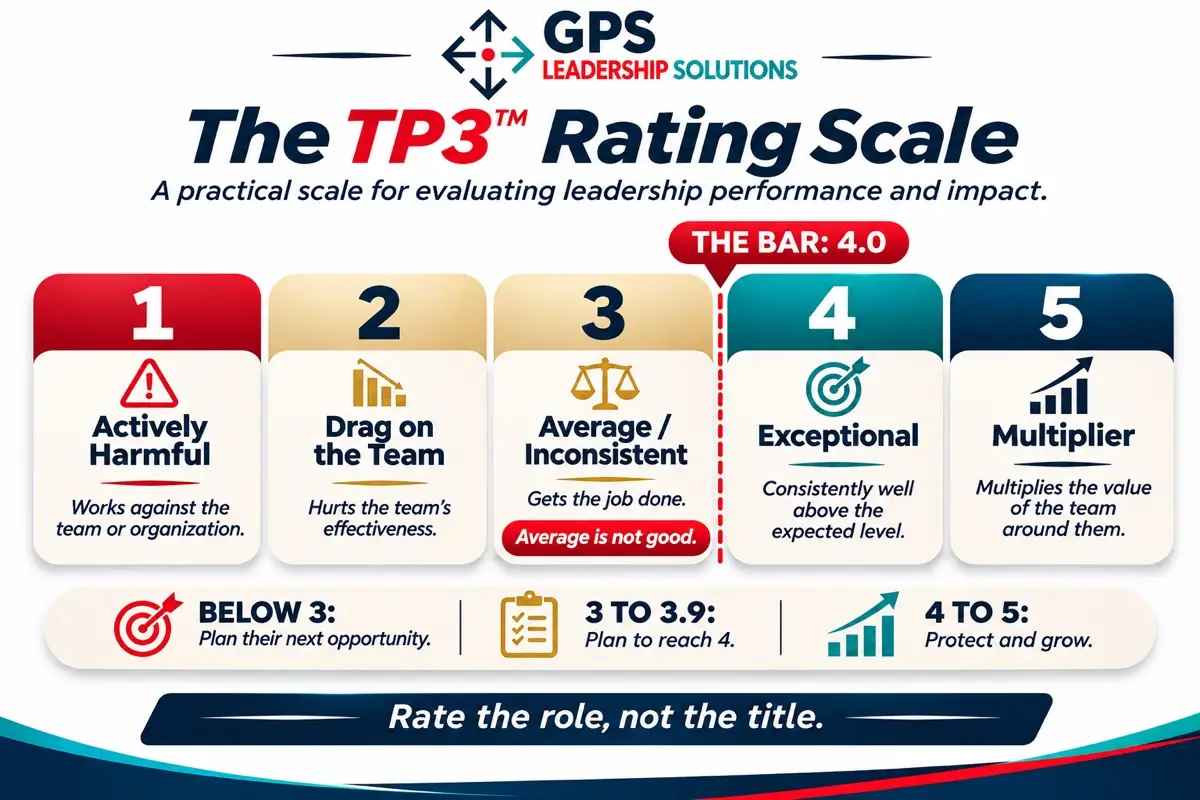
| 5 | Multiplier Walks on water. The value this person brings to the team and organization is multiplied. They produce an exceptional amount of value relative to their role and responsibilities. Protect and grow. |
|---|---|
| 4 to 4.9 | Exceptional Much better than average. A very strong performer who consistently delivers well above the expected level. This is the standard. Protect and grow. |
| 3 to 3.9 | Average / Inconsistent Average, and average is not good. Gets the job done, but is not exceptional. A plan to reach a 4. |
| 2 to 2.9 | Drag on the Team Their performance or behavior negatively affects the team's effectiveness. Plan their next opportunity. |
| 1 to 1.9 | Actively Harmful Actively works against the team or organization. Plan their next opportunity. |
A 4 is what you want across a leadership team: much better than average, consistently delivering well above the expected level. That is why a 3.9 is not a near miss. It is still average, and average is not good, so it calls for a plan to reach a 4.
Moving from 3.9 to 4.2 is the difference between average and exceptional in the eyes of the people who work with that leader every day.
We use this scale in every 14-Day Executive Leadership Diagnostic and in the stakeholder pulses at day 30, 60 and 90, so every number on this site reads the same way.