
When the situation is changing under you
Too Much Is Landing on You at Once
Divestitures, integrations, restructures and ownership handovers all produce the same condition: a capable leader deciding faster than they can think.
Divestitures, integrations, restructures and ownership handovers all produce the same condition: a capable leader deciding faster than they can think, on incomplete information, while holding a team together. The work is to separate what you control from what you do not, then commit to a small number of decisions and protect them.
Not ready for the full diagnostic? Take the free CEO Bottlenecks Scorecard →
Trusted by leaders at






Why does a transition overwhelm leaders who are otherwise very capable?
Because competence is not the constraint. In a transition the number of open questions rises sharply while the time to answer each one falls, and much of what is at stake sits outside the leader's control entirely. Capable people respond by working harder at everything, which is exactly the wrong move when the problem is volume rather than ability.
The way out is subtraction. Sort what is in front of you into what you control, what you can influence, and what is neither, then act only on the first two. Most of the weight in a transition sits in the third category, and putting it down is what creates room to decide well.
What changes first
How do I keep a team performing when I cannot promise them anything?
By holding two honest messages at once rather than choosing between them. Ask the team to keep performing at a high level, and be straightforward that they should also be looking after their own position. Leaders often assume these cancel out. They do not. What destroys trust is a reassurance that later proves hollow, not an honest account of uncertainty.
An SVP leading a business-unit divestiture ran exactly this. She kept her team performing through a process that carried real risk of senior-level redundancy, while telling them plainly to watch for their next opportunity.
"I was so impressed that I extended his coaching to my VPs and SVPs. Working with Alex was transformative. His insightful strategies shifted my mindset, and I took impactful risks with positive results."
 Jourdan HathawayChief Business Officer, General Assembly
How do I decide well when I am deciding under pressure?
Give yourself something to measure against. Under pressure most poor executive decisions are not miscalculations. They are comparisons made against nothing, where each option is judged on how it feels that week.
Define the outcome you actually want, in concrete terms, including what it costs. The same SVP mapped what she wanted her life to look like, covering her children, her health and her retirement, then put a real number against it. Three competing offers then became straightforward to compare, because there was finally a target to compare them to.
What if the transition is an ownership handover?
This is its own category, and it is harder than it looks. When a founder hands a company to a family member or an internal successor, the successor inherits the organisation but not the authority, and the two arrive on very different schedules.
- The successor usually leads differently, because that is what the business now needs. A second-generation owner of a technical training company described taking over from her father, an engineer by trade who did not lean into difficult conversations, and bringing what she called a completely different skill set. Leading well, in that position, can look like repudiating the person who built the place.
- The longest-serving people are frequently the strongest resisters. Not from disloyalty. They were rewarded for two decades for the very behaviours now being changed. That is fair, it is worth saying out loud, and it does not remove the need to change them.
- Authority transfers on its own schedule. People keep routing decisions to the founder long after the title moves. That is a structural problem with a structural fix, not a loyalty problem.
Most poor executive decisions under pressure are not miscalculations. They are comparisons made against nothing.
Why a written target changes the outcomeSee the actual output
Look at It Before You Decide
A diagnostic produces three things. All three are below in full, as a complete worked example for a four-leader team at a multi-location trucking and parts company. The team, the company and the scores are illustrative. The format, the depth and the wording are exactly what you receive.
- The team report a sponsor sees →TP3 scores across the leadership team, where the gaps sit, and what to address first.
- What each leader logs into →Their own scores, their 90-day focus, and their debrief.
- The full written report, as delivered →The complete document. Nothing removed.
Your next seven days. Write down everything currently taking up your attention. Mark each item controlled, influenced, or neither. Take one week off from acting on anything in the third column. Do not stop caring about it, just stop spending decisions on it, and see what capacity comes back.
Who you're working with
Built for This Work. Not Borrowed From Another.
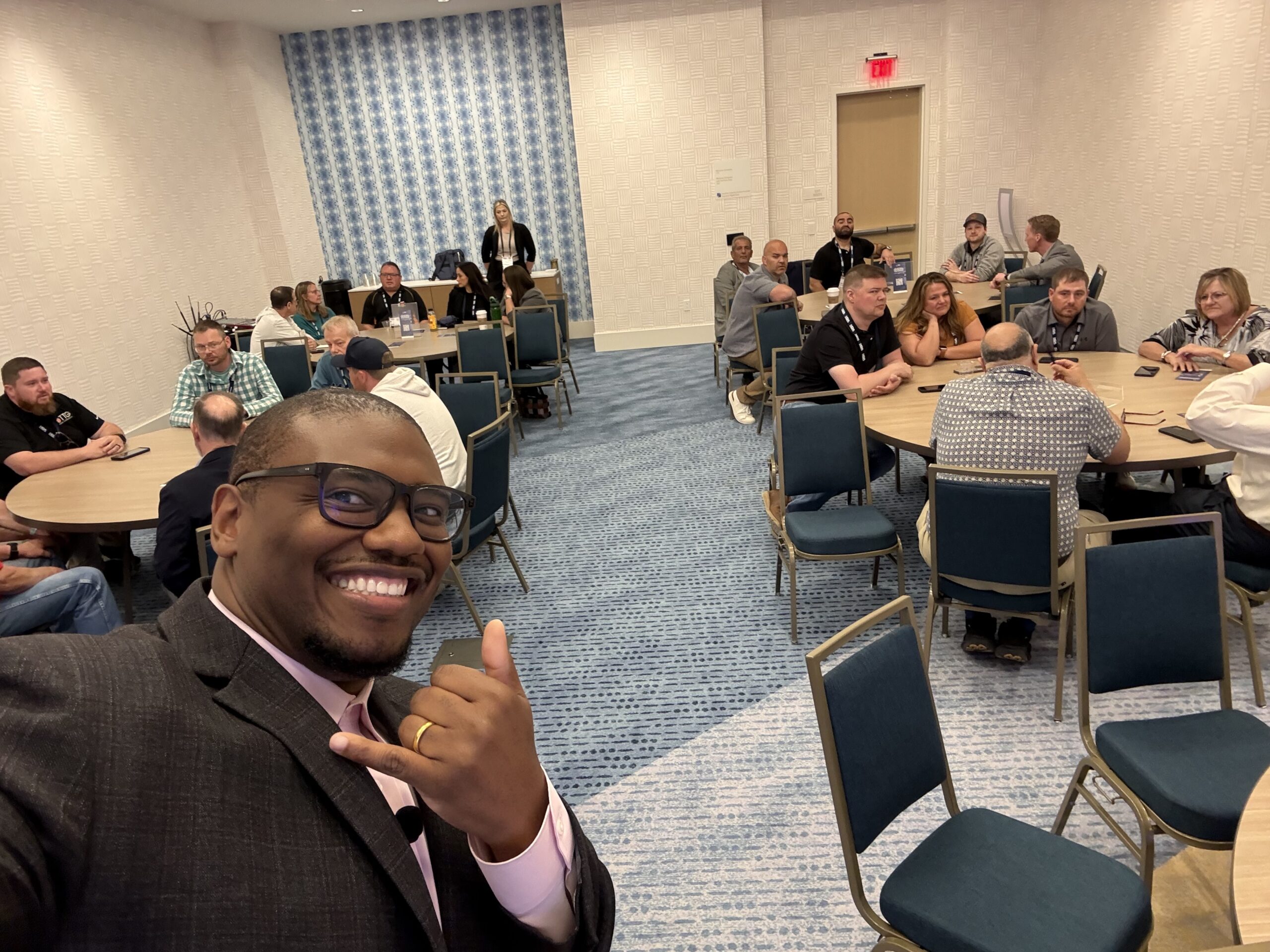
Alex Tremble is the founder of GPS Leadership Solutions and the creator of TP3™, the 4C™ Connection Model and the 3R Relationship Model™. He has published five leadership books.
The work runs on one engine, whatever the sector: clarify the real outcome, expose the honest gap, force the real choice. He is not the domain expert in your business. He is the person who reduces a complex, emotionally loaded situation to the two or three things that actually matter, so a capable leader can decide and move.
Frequently asked
Questions Executives Ask
Can coaching help during a transition, or is it already too late?
A transition is when this work has the most leverage, because decisions being made now set the terms of everything after it. The constraint is usually the leader's time, which is why the diagnostic runs in fourteen days rather than over a quarter.
Is executive coaching confidential from my employer?
What a leader discusses in coaching is not reported to their employer, including where the employer is paying. Where a sponsor commissions the work, what is shared is the agreed focus and whether commitments are being met, not the content of the conversations.
Can you help if my own role might be eliminated?
Yes, and that is a common reason senior leaders start. The work covers both halves of the situation: leading the team well through the process, and making a clear-eyed decision about your own position from a defined target rather than under pressure.
How do I take over a family business without erasing the founder?
By separating the person from the practice. What the founder built and what the organisation now needs are two different conversations, and treating them as one is what turns a handover into a loyalty test. Name what the previous era earned, then be specific about what is changing and why, including that the change reflects the business's stage, not a verdict on the person.
Will people be honest about me if my family owns the company?
Only if the instrument protects them, which is why ratings are confidential and reported in aggregate. This matters more in family-owned businesses than anywhere else. A successor is exactly the leader least likely to receive candid feedback in the ordinary course of a working week.
Our longest-tenured people resist every change. Is that fixable?
Usually, once the reason is named accurately. Long-serving people are typically resisting because they were promoted, bonused and thanked for years for the behaviours now being changed, so the resistance is consistent rather than obstructive. Acknowledging that directly, then rewarding the new behaviour as visibly as the old one was rewarded, is what moves it.
I don't have time for coaching right now.
That is generally the symptom rather than the objection. A leader with no time is describing the exact condition the work addresses. The realistic question is not whether you can add something, but which of the things currently on you should not be.
What if the transition ends before 90 days?
The behaviours do not end with it. What makes a leader effective under pressure carries into whatever follows: separating control from influence, deciding against a defined target, being straight with a team. The 90-day cycle measures whether those behaviours held, not whether the transition finished.
Get an Honest Read Before the Next Decision
In a transition the most expensive thing to be wrong about is how you are actually landing with the people around you. The diagnostic answers that in two weeks, which is usually faster than the transition moves.
Request the 14-Day Diagnostic Start with the free Scorecard